
Chesapeake
Grassfield and Cahoon new builds sit on compacted builder soil under thin topsoil. On those lots the prep, not the sod, decides whether it takes.
Lawn care in ChesapeakeBermuda · Zoysia · Fescue
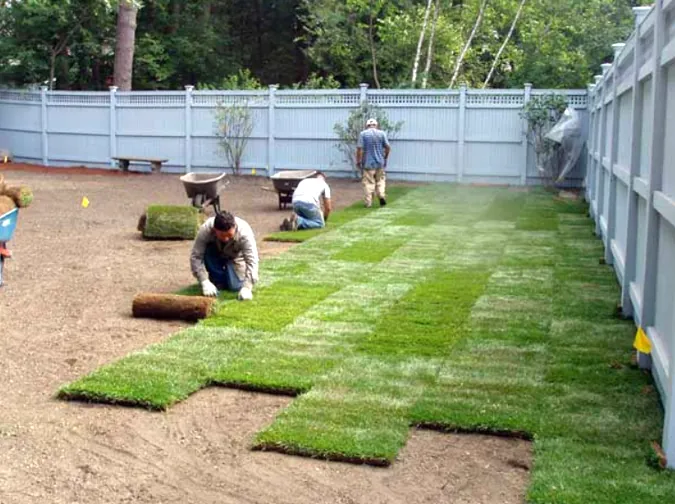
A finished lawn in a single day — if the nine steps underneath it are done right. Tiff Way Bermuda, Zoysia and Fescue, installed by a crew that will tell you honestly which one your yard should have.
The first is prep. Sod laid over living weeds, compacted clay or an uncorrected grade will look perfect for three weeks and then start thinning from underneath. You cannot fix that later without pulling it up.
The second is water. New sod is a living thing with no root system — for the first two weeks it depends entirely on you keeping the soil beneath it moist. More new lawns die of under-watering in week two than of anything else.
We handle the first one. We'll make very sure you understand the second one before we leave.
Everything living comes out first. Sod laid over surviving weeds loses — they push straight through the seams.
Old thatch, roots, rock and construction debris get cleared so the sod sits on soil, not on trash.
Hampton Roads clay compacts hard. Roots cannot penetrate a pan, so we open it up before anything goes down.
Organic matter and amendments worked in, so the new lawn has something to root into rather than sitting on subsoil.
Fall away from the house, no low spots to hold water. This is the step that determines whether you have a soggy corner in three years.
Rake smooth, then firm it so the sod does not settle into ruts and dips after the first heavy rain.
Rolls butted edge to edge with staggered joints like brickwork. Gaps dry out and become weed lines.
Clean cuts around beds, walks, trees and irrigation heads — the detail that separates a professional install from a rental-truck job.
Rolled to press the sod into full contact with the soil, then watered in immediately. Air pockets under sod kill it.
| Tiff Way Bermuda | Zoysia | Fescue | |
|---|---|---|---|
| Season type | Warm-season | Warm-season | Cool-season |
| Sun needed | Full sun — struggles in shade | Full sun to light shade | Handles real shade best |
| Winter color | Goes dormant, tan | Goes dormant, tan | Stays green |
| Summer heat | Excellent | Excellent | Struggles in peak heat |
| Foot traffic | Very tough, repairs fast | Dense and durable | Moderate |
| Ongoing work | Frequent mowing when growing | Slow-growing, less mowing | Needs fall aeration & overseeding |
Grass choice is a local decision. What works under a Norfolk canopy will die in a full-sun Virginia Beach subdivision, and the reverse.
Grassfield and Cahoon new builds sit on compacted builder soil under thin topsoil. On those lots the prep, not the sod, decides whether it takes.
Lawn care in ChesapeakeUnder a canopy this heavy, Bermuda and Zoysia will not hold. That means shade-tolerant fescue — and sometimes an honest conversation about whether sod is the right answer at all.
Lawn care in NorfolkFull-sun subdivisions here are Bermuda and Zoysia country. The sandier Red Mill and Sandbridge-side lots drain fast, so the watering plan for the first three weeks matters more than it does inland.
Lawn care in Virginia BeachWe install Tiff Way Bermuda, Zoysia and Fescue. Bermuda and Zoysia are warm-season grasses — they love our summers, go dormant and tan in winter, and need real sun. Fescue is cool-season — it stays green far longer through the year and tolerates shade much better, but it needs overseeding every fall to stay thick.
The honest short version: a full-sun yard where you want a tough, dense summer lawn points to Bermuda or Zoysia. A yard with mature tree cover, or an owner who wants green in December, points to Fescue.
Most residential lawns are installed in a single day once the prep is done. The prep is the part that determines whether it takes — killing off the existing weeds and grass, grading, and amending the soil.
Heavily and often at first, then progressively less. The first two weeks the soil under the sod must stay consistently moist — that is when roots knit into the ground. After that you taper toward a normal deep-and-infrequent schedule. Our crew walks you through the exact schedule at handoff, and it is the single biggest factor in whether new sod survives.
Once the sod has rooted enough that a corner does not lift when you tug it — usually about two to three weeks. First cut is high, with a sharp blade, and you avoid turning the mower sharply on it.
Yes. Laying sod over existing weeds and turf is the most common reason a new lawn fails. Our process starts by killing off what is there, then grading, amending and rolling — nine steps in all before the first roll of sod goes down.
We'll measure the area, look at your sun and soil, tell you which grass belongs there, and quote the install.